Every few years, a familiar conversation starts inside a marketing team. The website looks dated, competitors have launched something sleeker, and a new executive has opinions about the hero image. A redesign gets approved, a web design agency gets hired, and three months later a beautiful new site goes live to a quiet disappointment: traffic dips, form fills drop, and nobody can explain exactly why.
This outcome is common enough to be predictable. The problem is rarely the talent at the agency or the web development company doing the build. The problem is that most website design projects begin with a question about how the site looks instead of a question about what customers are trying to do when they arrive. Research answers the second question, and answering it first is what separates a redesign that pays for itself from one that quietly costs a year of pipeline.
TL;DR
- Most website design projects are scoped around internal opinion, competitor screenshots, and aesthetic preference rather than evidence about customer behavior.
- Analytics tell you what happened on your site. They cannot tell you why it happened, what visitors expected instead, or what they went looking for elsewhere.
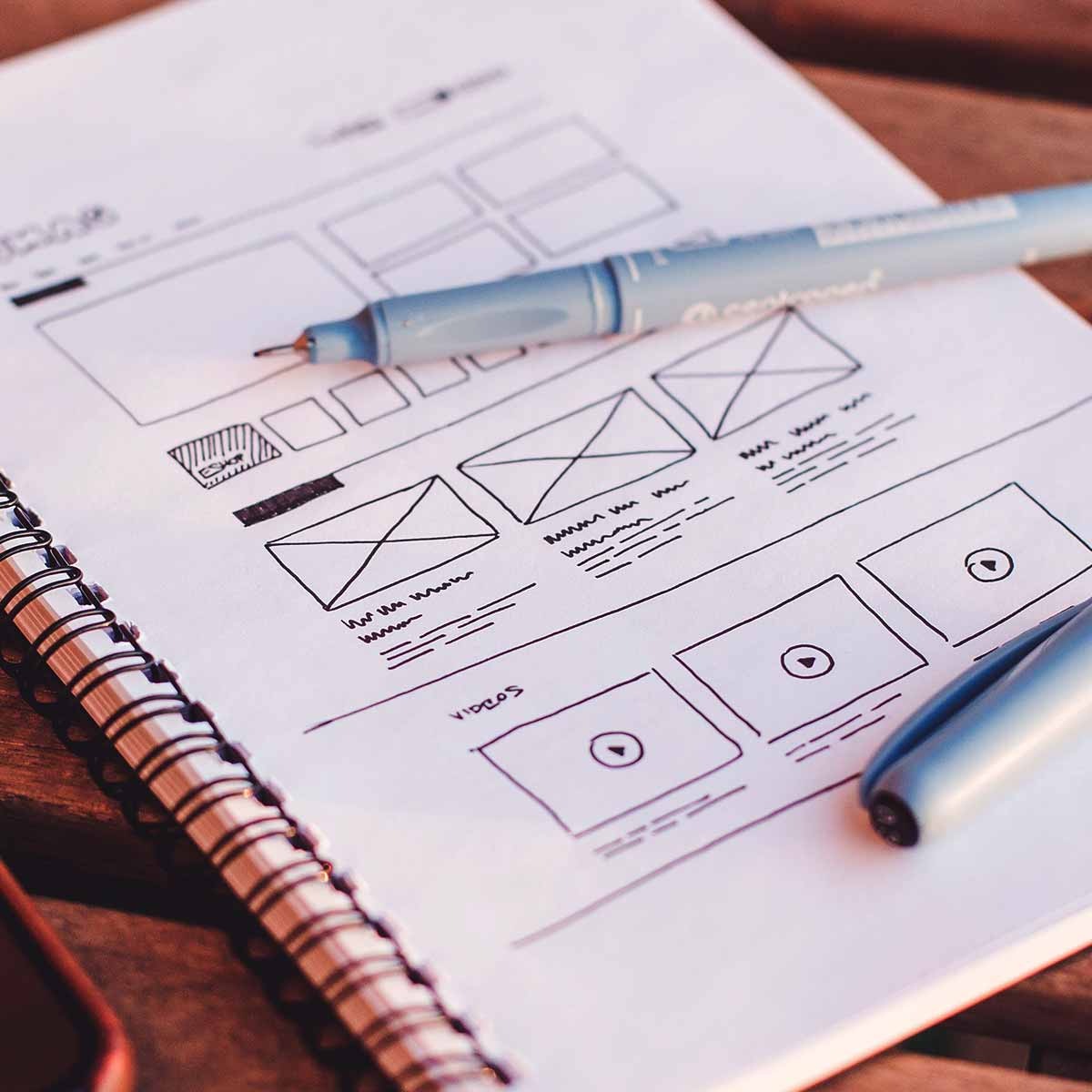
- A short research phase before the first wireframe changes what gets built and what gets left alone.
- Research findings translate directly into technical decisions: information architecture, component libraries, form design, performance budgets, and content hierarchy.
- The best web design agency or web development company for your project is one that asks for evidence before it opens a design tool.
- Treating launch as an experiment with baselines, staged rollouts, and defined success metrics protects what was already working.
Table Of Contents
- Why Website Design Projects Fail More Often Than Teams Admit
- What Analytics Show You And What They Leave Out
- The Research That Belongs Before The First Wireframe
- Turning Research Findings Into Technical Decisions
- What To Ask A Web Design Agency Or Web Development Company Before You Hire
- How To Launch Without Losing What Already Works
- Measuring Website Design Like A Research Study
- Things To Know About Research Led Website Design
- Frequently Asked Questions
- The Bottom Line On Website Design
Why Website Design Projects Fail More Often Than Teams Admit
A failed redesign rarely looks like a failure at launch. The site is faster, the typography is cleaner, and the stakeholders who approved it are pleased. The damage shows up in the following quarter, buried in metrics that nobody assigned to the project.
The common failure patterns are consistent across industries:
- The redesign solves an internal problem. Leadership was tired of the old brand, so the site was rebuilt around new visuals while the conversion path stayed exactly as confusing as before.
- Content is reorganized around the org chart. Navigation mirrors how the company is structured rather than how customers describe what they need, so visitors land on the wrong page and leave.
- High performing pages are quietly deleted. A page that ranked well and converted steadily gets merged into a new section, the URL changes without a redirect, and organic traffic disappears.
- Aesthetics beat legibility. Low contrast text, oversized hero sections, and animation-heavy scroll effects look impressive in a design review and frustrate a visitor on a mid-range phone.
- Nobody defined success. Without a baseline and a target, the new website design cannot be evaluated, so the team defends it instead of improving it.
Each of these has the same root cause. The team made decisions about customer behavior without asking customers anything.
What Analytics Show You And What They Leave Out
Most teams are not short on data. Analytics platforms, heatmaps, session recordings, and CRM reports produce more numbers than anyone reads. The trouble is that behavioral data describes an outcome without explaining the reasoning behind it.
Your analytics can tell you that most visitors abandon the pricing page. They cannot tell you whether people left because the pricing felt too high, because the tiers were confusing, because the quote form asked for information they did not have on hand, or because they were comparison shopping and always intended to come back.
Those four explanations lead to four completely different builds. One is a positioning problem, one is a content and layout problem, one is a form design problem, and one is not a problem at all. Choosing the wrong explanation means paying your web development company to fix something that was never broken.
The same gap appears everywhere in redesign planning:
- A high bounce rate on a blog post may mean the content failed, or it may mean the content answered the question so completely that the reader left satisfied.
- Low engagement with a feature page may mean the page is poor, or it may mean the audience does not care about that feature.
- Mobile conversion lagging desktop may be a responsive layout issue, or it may reflect that mobile visitors are early-stage researchers who convert later on desktop.
Behavioral data narrows the list of questions worth asking. Qualitative research answers them.
The Research That Belongs Before The First Wireframe
A pre-redesign research phase does not need to be long or expensive. It needs to be pointed at decisions your team and your web design agency are about to make anyway. A typical program combines a few complementary methods.
Understanding What Visitors Are Trying To Do
In-depth interviews with recent customers and recent non-buyers surface the actual decision process: what triggered the search, what they compared, what they needed to see before contacting anyone, and what almost stopped them. These conversations routinely reveal that the information a buyer needed most was on page four of the site, or was not there at all.
Surveys put scale behind what the interviews suggest. If eight of twelve interviewees mention that they could not tell whether the service was available in their region, a survey tells you whether that is a majority concern or a coincidence, and whether it varies by segment.
Understanding Where The Current Site Breaks
Usability testing on the existing site is the most underused research method in web projects. Watching ten people attempt a real task, such as finding a price, booking a consultation, or comparing two products, will expose more actionable problems in an afternoon than a quarter of heatmap review. It also protects the budget, because some problems turn out to be fixable without a full website design overhaul.
Card sorting and tree testing address navigation directly. Participants group your content the way it makes sense to them, then attempt to locate specific items in a proposed structure. The result is an information architecture based on customer mental models rather than internal terminology.
Competitive and category review shows what the audience has been trained to expect. If every competitor puts pricing behind a form and one does not, that is a strategic decision worth making deliberately instead of by default.
The output of this phase is not a slide deck. It is a short list of prioritized, evidence-backed decisions that designers and developers can build against.
Turning Research Findings Into Technical Decisions
Research earns its budget when findings become specifications. The translation is more direct than most teams expect.
- Information architecture. Tree testing results become the navigation structure, the URL taxonomy, and the internal linking plan, which also carries real SEO consequences.
- Page templates and component library. If research shows buyers consistently need proof, specifications, and availability in that order, those become reusable components with a defined sequence rather than decisions made page by page.
- Form design. Interview findings about which questions feel intrusive or premature determine which fields are required, which are progressive, and where a multi-step form reduces abandonment.
- Content hierarchy and copy. The words customers use to describe their problem become headings and body copy, which improves both comprehension and search visibility.
- Performance budgets. If a meaningful share of your audience arrives on mobile networks, that argues for constraining image weight, deferring third-party scripts, and setting Core Web Vitals targets before design begins rather than optimizing after launch.
- Accessibility requirements. Research that includes participants with varied devices, eyesight, and technical confidence produces contrast, font size, and interaction standards the design system enforces.
This is the point where a research-led project starts to feel different to the people building it. Requirements arrive with reasons attached, and debates about layout get resolved with evidence instead of seniority.
What To Ask A Web Design Agency Or Web Development Company Before You Hire
Choosing a partner is one of the biggest decisions in any website design project, and portfolios alone will not tell you how a team makes decisions. Beautiful case studies show outputs. They rarely show whether those outputs improved anything.
Before signing with a web design agency or web development company, ask:
- How do you decide what to build? Listen for customer interviews, usability testing, or analytics review. Be cautious if the answer starts with mood boards.
- What happens to our existing pages and rankings? A capable team will talk about content inventories, redirect maps, and SEO migration without being prompted.
- How will we measure success? Look for specific metrics, a pre-launch baseline, and a review date, not "a modern look and feel."
- Can you show results, not just screenshots? Ask for before-and-after conversion, lead, or traffic figures from past projects.
- Who owns the design system and code after launch? You should be able to maintain and extend the site without being locked into one vendor.
- How do you test with real users? Even a small round of usability testing before launch signals that the team values evidence over taste.
The strongest partners welcome these questions, because research-led website design makes their work easier to defend and their results easier to prove.
How To Launch Without Losing What Already Works
A redesign is a migration as much as a creative project, and migrations are where measurable value disappears. A disciplined launch protects the asset you already have.
- Build a full inventory before anything is cut. Every URL, its traffic, rankings, conversions, and backlinks. Pages that perform get preserved, improved, or redirected deliberately.
- Map redirects one to one. Blanket redirects to the homepage destroy both rankings and user trust. Each retired URL should point to its closest equivalent.
- Keep what tested well. If usability testing showed the old quote form performed fine, resist redesigning it for consistency alone.
- Stage the rollout. Releasing one section or template group at a time makes it possible to attribute performance changes to specific decisions.
- Test the significant changes. Where traffic volume supports it, A/B test the new conversion path against the old one rather than switching everyone at once.
- Instrument before you launch. Event tracking, form analytics, and dashboards should be ready on day one so the first two weeks produce usable data.
Measuring Website Design Like A Research Study
The most useful shift a team can make is to treat the redesign as a hypothesis rather than a deliverable. A hypothesis has a baseline, a prediction, and a review date.
Before launch, record the numbers that matter: organic sessions to key pages, conversion rate by template, form completion and abandonment rates, qualified lead volume, and page speed on representative devices. Write down what the new website design is expected to change and by how much.
After launch, allow enough time for seasonality and search re-indexing before drawing conclusions, typically 60 to 90 days. Then compare against the baseline and run a short round of post-launch usability testing. New designs create new confusions, and the fastest way to find them is to watch someone use the site.
Reviewed this way, a redesign stops being a one-time event and becomes an ongoing program of small, evidence-backed improvements, which is where most of the compounding return comes from.
Things To Know About Research Led Website Design
- Research before a redesign frequently reduces scope. Some problems attributed to the website turn out to be pricing, positioning, or sales follow-up problems.
- A small qualitative sample goes a long way for usability. Most severe issues surface within the first five to eight participants.
- Internal stakeholders are not a substitute for customers, and neither is the sales team, whose view is shaped by people who already made contact.
- Research is most valuable before the contract with your web design agency is signed, because it changes the brief rather than the revisions.
- The audience you are designing for may not match the audience you have. Research with non-customers is often where the largest opportunities appear.
Frequently Asked Questions
Q: How long does research take before a website design project?
A ocused program combining usability testing, a set of in-depth interviews, and a short survey typically runs three to five weeks, which usually fits inside the time a team spends selecting a partner and kicking off the project.
Q: Should research come from our web design agency or a separate research partner?
Either can work, as long as the research is independent enough to challenge assumptions. A team that designs the site and also validates it has an incentive to confirm its own choices, so many companies bring in a research partner to set the brief and evaluate results.
Q: We have limited traffic. Is research still worth it?
Lower traffic makes research more important, not less. Sites with modest volume cannot reach statistical significance through A/B testing alone, so qualitative methods carry more of the burden of explaining behavior.
Q: What is the difference between a web design agency and a web development company?
A web design agency typically focuses on user experience, visual design, and content structure, while a web development company focuses on engineering, integrations, performance, and infrastructure. Many projects need both, and research gives both teams a shared, evidence-based brief.
Q: Can AI tools or heatmap software replace customer research?
Those tools help identify where attention goes and where friction appears. They observe behavior rather than motivation, so they help you prioritize questions but do not replace speaking with people in your market.
Q: How do we know the new website design worked?
Define success metrics and a baseline before launch, review them 60 to 90 days after, and pair the numbers with a short round of usability testing so you understand the reasons behind the movement.
The Bottom Line On Website Design
A website is a decision-making tool for the people who visit it. When someone lands on your site, they are trying to determine whether you serve their situation, whether you are credible, what it costs, and what happens next. Website design succeeds when it answers those questions faster and more clearly than the version before it, and that standard has very little to do with whether the layout feels current.
Research keeps the project pointed at that standard. It tells you which pages carry the business, which questions go unanswered, where people get stuck, and what language they use to describe the problem you solve. Those findings sharpen the brief for your web design agency, shrink the scope for your web development company, and make the launch far less risky.
If a redesign is on your roadmap, start by auditing your current site against two questions: do we know what visitors are trying to accomplish here, and do we know where they currently fail? If either answer is a guess, that is where the project should begin. Ready To Launch's Web Design service and our qualitative and survey research programs can be scoped together during a free consultation, so the site you build is shaped by what your customers actually need from it.